
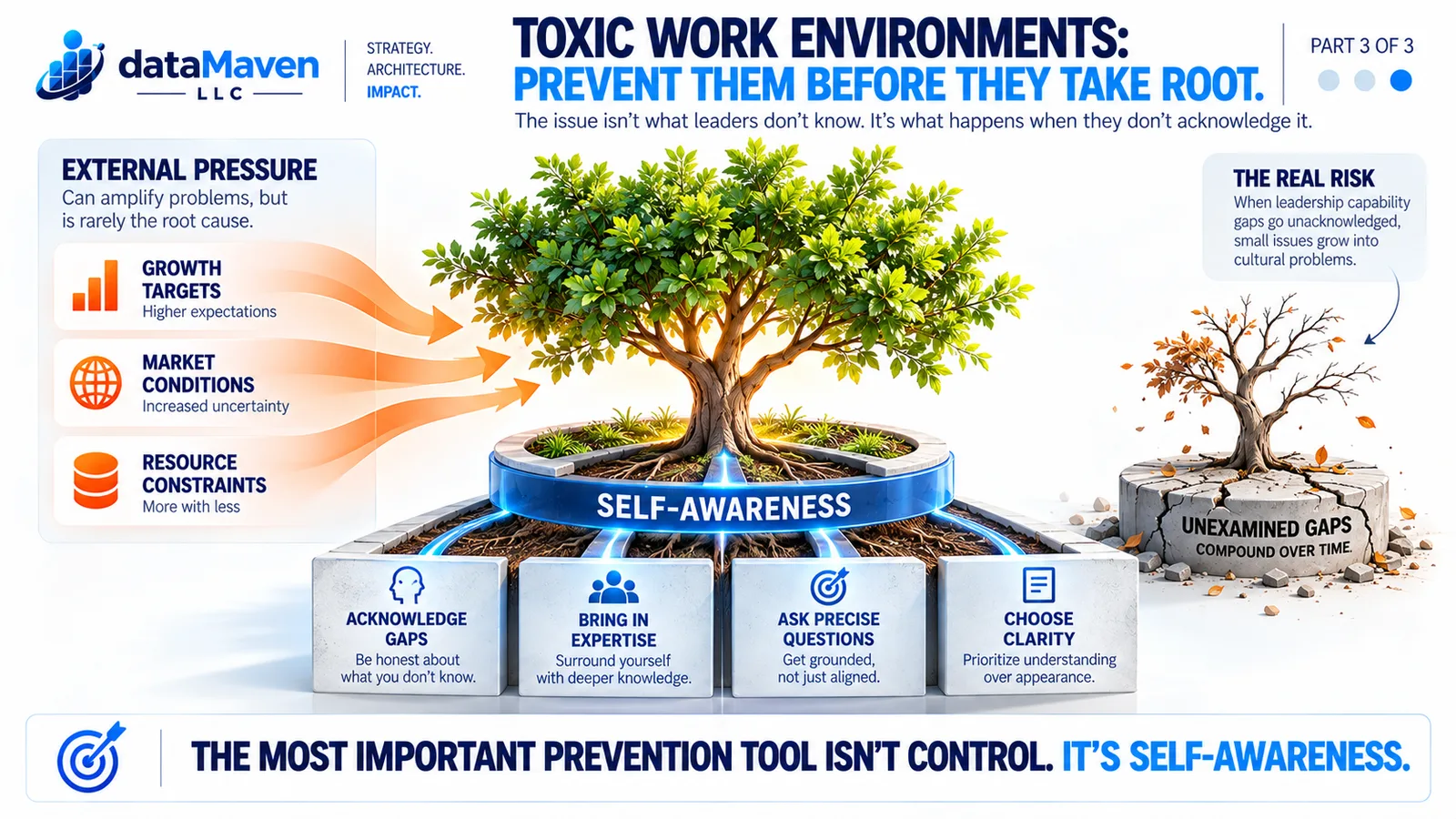
The issue isn’t that leaders don’t know everything. No one does.
The issue is what happens when they don’t — and how they respond.
The easy answer
It’s easy to blame toxic environments on pressure:
- growth targets
- market conditions
- resource constraints…
Those factors matter. But more often, they amplify what’s already there.
The harder truth: unacknowledged gaps in leadership capability shape how teams operate.
What strong leaders do
Strong leaders take a different approach:
- They acknowledge what they don’t know — openly
- They surround themselves with people who have deeper expertise
- They ask precise, grounded questions
- They prioritize clarity over sounding aligned
Credibility doesn’t come from projecting certainty. It comes from not pretending you have it.
The real prevention
Toxic environments don’t originate from intent. They emerge through small gaps — left unexamined — that compound over time.
And the most important leadership skill in preventing that isn’t control.
It’s self-awareness.